A few years ago, part of an interview of a job asked me to draft a speech for the Emergency Relief Coordinator as if he would be addressing himself to the United Nations when Uganda was a true forgetten emergency as DRCongo is now... This is what I came out with...
Mr. President,
A recent study on donor accountability described the links between donors and beneficiaries as indirect. Let me introduce Okello to you. Okello is 12, he's skinny and one of his front teeth is missing. I met Okello in Kitgum district, Northern Uganda, last November. His story made such an impression on me that I decided to be his spokesman.
· Okello comes from a region in Northern Uganda where, after renewed fighting between the government and the Lord's Resistance Army, some 800,000 Acholi people, half of them children, have been displaced. They are now living in so-called protected camps. But the camps themselves are now targets for attacks, just as the villages once were.
· Now I want you to imagine Okello joining me on this podium, from which you will hear his testimony.
· You will see he has no shoes. And if you are close by, you may notice an odour. Please understand, my young friend doesn't have access to soap.
· These are Okello's words: "I remember one night in June, the rebels attacked Karimojong district. They burst into our home and raped my sister Agwaki. My father refused to let me go with them, so they torched our hut.
· So my parents had no choice - we had to flee. We left everything behind, our land and our goat. My father lost his job, my mother the land where we grew our food. My sister hasn't recovered from the rape. That night, we were all sent to hell.
· Ever since, I have felt hungry. But my three-year-old brother suffered most. My mother took him to a clinic run by muzungu, white people. They told her he would have to spend a month there, but he had to stay much longer - the clinic didn't always have the food it needed, and even the muzungu could not work properly.
· As for me, I worry every day that the rebels will come back and take me away to be a soldier. So like most of my friends, I go to sleep in the grounds of the local hospital. For now, that is the only safe place to sleep.
· In the name of my people, I want to thank you for letting me tell you my story. Please help bring peace back to our country.
[pause]
· Ladies and gentlemen, Okello's fate is not unusual. On the contrary. There are about 45 million people in countries such as Liberia, Cote d'Ivoire, Somalia, Sudan or Chechnya, where there are children with similar stories.
· Like so many others, Okello is being denied his most basic needs and human rights. It's hard to know what to say when you are confronted with this reality, as I was on my trip to Uganda.
· Our first reaction, our instinct, would be to go to Okello and comfort him. To reassure Okello that the world has not forgotten about his daily nightmare. We will get out our check books, we will commit the funds needed to put an end to such misery.
· But if I tell Okello that the international community has been trying to help in the past years, would he believe me? Especially if I tell him the truth, that last year's appeal did not win funding for sectors as important as agriculture in his country?
· Can you think of a way to explain that lack of funding means that the so-called protected camps offer no protection from diarrhoea and intestinal worms, and no treatment for respiratory diseases including pneumonia?
· Remember the Balkans. I don't wish to downplay the horror of what happened there, but in some ways, the people there were the lucky ones - they got blanket media coverage and resources, while for long-running African crises such as those in Sudan, Angola, aid agencies struggled to find funds.
· That is why OCHA has reinforced its media strategy to focus public attention on its
annual Consolidated Appeals. OCHA knows that sustained media attention, is important to creating political movement. Its Flash Appeals keep abreast of every “forgotten emergency” with their concise overview of life-saving needs. Sad to say, most of these "forgotten emergencies" are in Africa.
Mr. President,
· A recent study underlined that foreign policy interests or, rather, a lack of thereof, are to a large extent responsible for the phenomenon of “forgotten emergencies”. The good news is that donors have recognized their shortcomings. They've started the Good Humanitarian Donorship process in Stockholm, to make aid more responsive to needs. They have selected Burundi and the Democratic Republic of the Congo as pilot Consolidated Appeals for the implementation of good humanitarian donorship. I am convinced this will help raise the level of funding for countries with daunting needs which last year only received 28% and 37% of their aid requirements.
· Let us hope that the donor community will be ready to finance this year's appeal in full. If we raise $128 million dollars for the estimated 1.2 million displaced in forgotten Uganda, that would mean $106 dollars per person. Surely that's not too much to ask.
· I made myself a promise not to let Okello down. I can remember his voice. I can still picture the skinny boy near Kitgum's district hospital, holding his piece of bread. I would like to go back next year, and look him in the eye, and tell him that we care and that we have not let him down.
Thank you, Mr President.
dimanche 25 novembre 2007


La mort d`un être cher
La mort d`un être cher
Distraitement, en faisant mon courriel (il est rare qu`une femme ne fasse qu`une chose à la fois) j`écoute Maryse Chartrand parler du suicide de son compagnon à "Tout le monde en parle". Je ne connais pas cette déchirure causée par le suicide mais plutôt par la perte soudaine de mon compagnon Emanuele, lorsque je vivais à Rome.
Oui, tout comme elle, j`ai senti que mon monde s`est écroulé.
Je ne me souviens plus de grand chose de ces jours qui ont suivi sa mort, sinon d`un grand nuage gris autour de moi, d`une impression de vide absolu. Sa mort est survenue un mois avant mon 40è anniversaire.
Pourtant, la vie reprend toujours le dessus, sur tout...
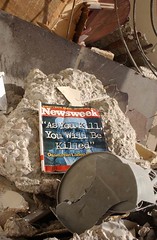
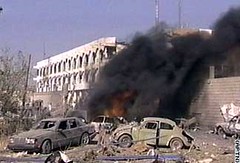
Elle a aussi du reprendre le dessus lorsque impuissante, cinq mois plus tard, je me suis postée devant CNN lorsque j`ai su qu`une bombe avait explosée sur les bureaux des Nations Unies en Iraq. Un de mes très cher ami était en poste là-bas...
La longue attente a donc commencé. A chaque minute je priais et j`espérais que le miracle se produise, que l`on puisse extirper son corps vivant des décombres de l`Hôtel Canal.
Deux heures de tortures, d`un calvaire indicible ou à chaque minute j`ai eu envie de vomir ma peine et de crier ma douleur. Les larmes ont cessé, j`avais tout pleuré le réservoir... Un lac de larmes s`était formé entre la télé et ma chaise de fortune installé dans le bureau de presse du Programme Alimentaire Mondial, en Italie, mon lieu de travail à l`époque.
Voilà que je me retrouve à pleurer une deuxième personne qui m`était aussi très chère. A vrai dire, je ne savais plus qui je pleurais, le 1er ou le 2e. Les larmes étaient confuses - le coeur en morceaux et l`âme ne voulait plus continuer...
Au moment ou CNN a annoncé la nouvelle que je redoutais tant, que mon cher ami avait succombé à ses blessures (il était visé, lui, le Chef), la terre s`est dérobée sous mes pieds; une amie a du me ramener à la maison car j`aurais été incapable de me reconduire - j`aurais errée et je me serais certainement perdue.
C`était mon 2e black out,. Je ne me souviens plus de rien ou presque, sauf de la sonnerie incéssante de mon téléphone; mes amis m`appelaient pour m`encourager. Ils ne trouvaient pas les mots car dans ces moments là, existent-ils encore des mots pour apaiser le coeur d`une amie souffrante de la perte de tant de personnes chères? Je ne crois pas...
Et pourtant... Petit à petit, le temps à fait son oeuvre. Il a fallu presque deux ans pour me remettre de ces pertes... Me voilà de nouveau profondément heureuse avec ma petite Xin Fa...
Marie-France
Sun Nov 25 21:12:00 EST 2007 |
Distraitement, en faisant mon courriel (il est rare qu`une femme ne fasse qu`une chose à la fois) j`écoute Maryse Chartrand parler du suicide de son compagnon à "Tout le monde en parle". Je ne connais pas cette déchirure causée par le suicide mais plutôt par la perte soudaine de mon compagnon Emanuele, lorsque je vivais à Rome.
Oui, tout comme elle, j`ai senti que mon monde s`est écroulé.
Je ne me souviens plus de grand chose de ces jours qui ont suivi sa mort, sinon d`un grand nuage gris autour de moi, d`une impression de vide absolu. Sa mort est survenue un mois avant mon 40è anniversaire.
Pourtant, la vie reprend toujours le dessus, sur tout...
Elle a aussi du reprendre le dessus lorsque impuissante, cinq mois plus tard, je me suis postée devant CNN lorsque j`ai su qu`une bombe avait explosée sur les bureaux des Nations Unies en Iraq. Un de mes très cher ami était en poste là-bas...
La longue attente a donc commencé. A chaque minute je priais et j`espérais que le miracle se produise, que l`on puisse extirper son corps vivant des décombres de l`Hôtel Canal.
Deux heures de tortures, d`un calvaire indicible ou à chaque minute j`ai eu envie de vomir ma peine et de crier ma douleur. Les larmes ont cessé, j`avais tout pleuré le réservoir... Un lac de larmes s`était formé entre la télé et ma chaise de fortune installé dans le bureau de presse du Programme Alimentaire Mondial, en Italie, mon lieu de travail à l`époque.
Voilà que je me retrouve à pleurer une deuxième personne qui m`était aussi très chère. A vrai dire, je ne savais plus qui je pleurais, le 1er ou le 2e. Les larmes étaient confuses - le coeur en morceaux et l`âme ne voulait plus continuer...
Au moment ou CNN a annoncé la nouvelle que je redoutais tant, que mon cher ami avait succombé à ses blessures (il était visé, lui, le Chef), la terre s`est dérobée sous mes pieds; une amie a du me ramener à la maison car j`aurais été incapable de me reconduire - j`aurais errée et je me serais certainement perdue.
C`était mon 2e black out,. Je ne me souviens plus de rien ou presque, sauf de la sonnerie incéssante de mon téléphone; mes amis m`appelaient pour m`encourager. Ils ne trouvaient pas les mots car dans ces moments là, existent-ils encore des mots pour apaiser le coeur d`une amie souffrante de la perte de tant de personnes chères? Je ne crois pas...
Et pourtant... Petit à petit, le temps à fait son oeuvre. Il a fallu presque deux ans pour me remettre de ces pertes... Me voilà de nouveau profondément heureuse avec ma petite Xin Fa...
Marie-France
Sun Nov 25 21:12:00 EST 2007 |
dimanche 18 novembre 2007
Sergio Viera de Mello - Foundation
News: The Sergio Vieira de Mello Foundation
"M - Requiem for Baghdad" was one of the most emotional short stories my friend Peter wrote for "The Road to the Horizon". For him, it was a challenge to weave that many personal emotions into one story. Emotions about the war in Iraq and Afghanistan, the turn the world made on 9/11, the humanitarian operations we were closely involved in after the invasions of Iraq and Afghanistan.
The story was written with the bombing of the Canal Hotel, the UN HQ in Baghdad, on August 19 2003 as the center part. That day still represents a very very dark period for me. A day I lost M, a close friend, due to senseless violence she had no part in. A day I lost several of my colleagues, and where several people in my team got severely wounded. A day which scarred many of us even up today.
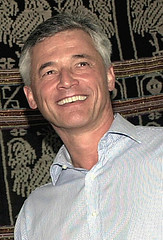
One of the people we lost was Sergio de Mello, who was the UN Secretary General's Special Envoy to Iraq at the time. A remarkable person I had the privilege to meet several times.His memory is still alive for many of us, so much that several people put their heads together, and decided to start a foundation in his honour. This is the message they just sent out:19 August 2003 was a sad day for the United Nations and all those who believe that peace and security can be achieved through dialogue and international cooperation.
On that fateful day, Sergio Vieira de Mello and 21 of his UN colleagues and associates fell victims to the first of a long series of violent acts that have characterized the Iraq war.
With Sergio Vieira de Mello's cruel disappearance, the world has not only lost a brilliant and charismatic advocate of peace and human rights but also a tireless and highly effective humanitarian champion.He represented the best the UN could offer in terms of promoting multilateral solutions to today's world's most challenging situations.
He remains a sterling example of selfless service for many to emulate.His brutal death provoked an outburst of sympathy and moving testimonies of high esteem and deep regret for his untimely loss. In acknowledgment of this widespread sentiments and growing movement to honour his memory and pursue his ideals, the Sergio Vieira de Mello Foundation has been created at the initiative of a small group of friends, colleagues and family to continue his unfinished work.
Dedicated to promoting dialogue for the peaceful resolution of conflict, the Sergio Vieira De Mello Foundation has been established as an international entity under Swiss law to continue Sergio’s mission and fulfill his vision through:• An Annual Prize in his name awarded to individuals, institutions or communities in recognition of their outstanding and unique work undertaken to achieve peaceful reconciliation between peoples and parties in conflict, through dialogue.
• Supporting the initiatives and efforts of individuals, institutions and communities engaged in applying dialogue for promoting peaceful reconciliation and co-existence between peoples and communities divided by conflict.• Supporting and encouraging academic and research institutions to conduct research and studies in the relevant areas of multilateral humanitarian action to which he devoted his life and on which he left a lasting impact.
• Establishing a Scholarship in his name to be awarded to selected academically outstanding children of victims of humanitarian conflict.The Foundation's website is expected to be operational soon.
The Foundation is in the process of establishing an Electronic Address List of "Friends of Sergio" for communicating directly with them to update and involve them continuously in the Foundation's work."
I will keep you posted.
Posted by Peter Casier, my friend on his blog on 31.10.07 0 comments
"M - Requiem for Baghdad" was one of the most emotional short stories my friend Peter wrote for "The Road to the Horizon". For him, it was a challenge to weave that many personal emotions into one story. Emotions about the war in Iraq and Afghanistan, the turn the world made on 9/11, the humanitarian operations we were closely involved in after the invasions of Iraq and Afghanistan.
The story was written with the bombing of the Canal Hotel, the UN HQ in Baghdad, on August 19 2003 as the center part. That day still represents a very very dark period for me. A day I lost M, a close friend, due to senseless violence she had no part in. A day I lost several of my colleagues, and where several people in my team got severely wounded. A day which scarred many of us even up today.
One of the people we lost was Sergio de Mello, who was the UN Secretary General's Special Envoy to Iraq at the time. A remarkable person I had the privilege to meet several times.His memory is still alive for many of us, so much that several people put their heads together, and decided to start a foundation in his honour. This is the message they just sent out:19 August 2003 was a sad day for the United Nations and all those who believe that peace and security can be achieved through dialogue and international cooperation.
On that fateful day, Sergio Vieira de Mello and 21 of his UN colleagues and associates fell victims to the first of a long series of violent acts that have characterized the Iraq war.
With Sergio Vieira de Mello's cruel disappearance, the world has not only lost a brilliant and charismatic advocate of peace and human rights but also a tireless and highly effective humanitarian champion.He represented the best the UN could offer in terms of promoting multilateral solutions to today's world's most challenging situations.
He remains a sterling example of selfless service for many to emulate.His brutal death provoked an outburst of sympathy and moving testimonies of high esteem and deep regret for his untimely loss. In acknowledgment of this widespread sentiments and growing movement to honour his memory and pursue his ideals, the Sergio Vieira de Mello Foundation has been created at the initiative of a small group of friends, colleagues and family to continue his unfinished work.
Dedicated to promoting dialogue for the peaceful resolution of conflict, the Sergio Vieira De Mello Foundation has been established as an international entity under Swiss law to continue Sergio’s mission and fulfill his vision through:• An Annual Prize in his name awarded to individuals, institutions or communities in recognition of their outstanding and unique work undertaken to achieve peaceful reconciliation between peoples and parties in conflict, through dialogue.
• Supporting the initiatives and efforts of individuals, institutions and communities engaged in applying dialogue for promoting peaceful reconciliation and co-existence between peoples and communities divided by conflict.• Supporting and encouraging academic and research institutions to conduct research and studies in the relevant areas of multilateral humanitarian action to which he devoted his life and on which he left a lasting impact.
• Establishing a Scholarship in his name to be awarded to selected academically outstanding children of victims of humanitarian conflict.The Foundation's website is expected to be operational soon.
The Foundation is in the process of establishing an Electronic Address List of "Friends of Sergio" for communicating directly with them to update and involve them continuously in the Foundation's work."
I will keep you posted.
Posted by Peter Casier, my friend on his blog on 31.10.07 0 comments
mardi 30 octobre 2007
Congo refugees leave everything for Uganda
As the craziness does not seem to stop in the DRCongo, I decided to post this - source Reuters.
--- Congo refugees leave everything for Uganda --- 29 Oct 2007 16:22:00 GMT
Congolese refugees wait to register with the U.N. refugee agency at a tented centre in Nyakabande, southwest Uganda, by Tim Cocks
NYAKABANDE, Uganda, Oct 29 (Reuters) - Four days ago, Louis Makasi was the proud owner of a drugstore -- modest, but still functioning amidst the chaos of eastern Congo's vicious war.
Now his sole possessions are a cracked jerry can, torn clothes and a cooking pot with nothing to cook in it.
"I tried to stay back but the fighting got too bad," he said, describing how men with guns had rampaged through his village last week, raping women and machine-gunning passers-by.
"I heard shots everywhere, I saw bullets flying around like locusts. The rebels blocked many of us as we tried to flee, saying we must stay and suffer."
Makasi is one of nearly 13,000 refugees who managed to escape the surging violence in Democratic Republic of Congo's lawless east in the past week, crossing the border into Uganda.
"I brought my family here, but I have no food, nothing I can give them," the 26-year-old father of six said, as he sat next to a makeshift tent pitched from white plastic sheets.
Tens of thousands of Congolese have fled in the past few weeks from North Kivu province in the face of some of the worst fighting since the end of Congo's 1998-2003 war, which drew in six countries and killed nearly 4 million people.
Sporadic clashes in North Kivu have worsened since August, when renegade general Laurent Nkunda pulled out of a January ceasefire with the government.
Congolese President Joseph Kabila has threatened a military offensive to forcibly disarm Nkunda's rebel Tutsi soldiers if they do not give themselves up.
Nkunda offered on Wednesday to start demobilising 500 of his estimated 4,000 troops but diplomats doubt his sincerity.
DESPERATE TO RETURN
Refugees fleeing Congo's violence often take flight to western Uganda, then head back within days, but the United Nations Refugee Agency (UNHCR) says the numbers flowing into the mountainous border province of Kisoro are steadily rising.
Flanked by towering black volcanos, Kisoro is home to forests housing Uganda's legendary mountain gorillas, the country's top earner of tourist dollars.
In a field ringed by green hills and volcanic peaks shrouded in wispy clouds, refugees dumped the few possessions they had salvaged -- mattresses, plastic wash basins, bags of clothes -- and sat waiting.
A lucky few with food stirred pots over smoking charcoal.
Jeune Rose Ayimikaye, 51, managed to escape Nkunda's rebels when they raided her village at night, but lost two of her eight sons in the process. Now she fears they have joined the ranks of his child soldiers.
"I saw rebels rape a 62-year-old woman. They were beating anyone still in their houses. They shot a child. I ran," she said. "I don't even know if my sons are alive or dead."
Women in kaleidoscopic dresses, some balancing more than one infant, queued to register at the UNHCR office, a white tent in a field strewn with other similar tents.
"We require more resources, food and non-food items," UNHCR representative for western Uganda Ilmi Diis Adan told Reuters.
"We need a minimum three weeks ... to see if the situation stabilises and give the refugees a choice to be relocated to a settlement or go back," he added.
Refugees said they were desperate to return home but few held out hope of doing so soon.
"There's nothing for us for here," said 37-year-old Jean Sobobera. "But we're going to die in Congo."
--- Congo refugees leave everything for Uganda --- 29 Oct 2007 16:22:00 GMT
Congolese refugees wait to register with the U.N. refugee agency at a tented centre in Nyakabande, southwest Uganda, by Tim Cocks
NYAKABANDE, Uganda, Oct 29 (Reuters) - Four days ago, Louis Makasi was the proud owner of a drugstore -- modest, but still functioning amidst the chaos of eastern Congo's vicious war.
Now his sole possessions are a cracked jerry can, torn clothes and a cooking pot with nothing to cook in it.
"I tried to stay back but the fighting got too bad," he said, describing how men with guns had rampaged through his village last week, raping women and machine-gunning passers-by.
"I heard shots everywhere, I saw bullets flying around like locusts. The rebels blocked many of us as we tried to flee, saying we must stay and suffer."
Makasi is one of nearly 13,000 refugees who managed to escape the surging violence in Democratic Republic of Congo's lawless east in the past week, crossing the border into Uganda.
"I brought my family here, but I have no food, nothing I can give them," the 26-year-old father of six said, as he sat next to a makeshift tent pitched from white plastic sheets.
Tens of thousands of Congolese have fled in the past few weeks from North Kivu province in the face of some of the worst fighting since the end of Congo's 1998-2003 war, which drew in six countries and killed nearly 4 million people.
Sporadic clashes in North Kivu have worsened since August, when renegade general Laurent Nkunda pulled out of a January ceasefire with the government.
Congolese President Joseph Kabila has threatened a military offensive to forcibly disarm Nkunda's rebel Tutsi soldiers if they do not give themselves up.
Nkunda offered on Wednesday to start demobilising 500 of his estimated 4,000 troops but diplomats doubt his sincerity.
DESPERATE TO RETURN
Refugees fleeing Congo's violence often take flight to western Uganda, then head back within days, but the United Nations Refugee Agency (UNHCR) says the numbers flowing into the mountainous border province of Kisoro are steadily rising.
Flanked by towering black volcanos, Kisoro is home to forests housing Uganda's legendary mountain gorillas, the country's top earner of tourist dollars.
In a field ringed by green hills and volcanic peaks shrouded in wispy clouds, refugees dumped the few possessions they had salvaged -- mattresses, plastic wash basins, bags of clothes -- and sat waiting.
A lucky few with food stirred pots over smoking charcoal.
Jeune Rose Ayimikaye, 51, managed to escape Nkunda's rebels when they raided her village at night, but lost two of her eight sons in the process. Now she fears they have joined the ranks of his child soldiers.
"I saw rebels rape a 62-year-old woman. They were beating anyone still in their houses. They shot a child. I ran," she said. "I don't even know if my sons are alive or dead."
Women in kaleidoscopic dresses, some balancing more than one infant, queued to register at the UNHCR office, a white tent in a field strewn with other similar tents.
"We require more resources, food and non-food items," UNHCR representative for western Uganda Ilmi Diis Adan told Reuters.
"We need a minimum three weeks ... to see if the situation stabilises and give the refugees a choice to be relocated to a settlement or go back," he added.
Refugees said they were desperate to return home but few held out hope of doing so soon.
"There's nothing for us for here," said 37-year-old Jean Sobobera. "But we're going to die in Congo."
mercredi 22 août 2007
The Pope`s last journey (2005)
Vatican City, April 7th 2005
Dear friends,
All streets lead to Rome, this "saying" has never been so true as today as thousands of pilgrims have invaded Vatican city. Today Thursday, I am writing in-direct from Via Della Conciliation, the road leading the St-Peter`s Basilica to the Pope`s very last trip.
Knowing how long pilgrims had waited up to 24 hours for some and tales of 36 hours have been heard) to pay their respects to John Paul II, I arrived early Tuesday morning in Vatican city and I found myself surrounded by thousands and thousands of lay people, nones, clergy, families with babies and enthusiastic youth groups who had also reached the Vatican. All these silent pilgrims had been queuing in an orderly fashion (quite contrary to the Italians which is extraordinary!!!)
I stopped by my ex-office at the Canadian Embassy to the Holy See, which is conveniently located right on the... via Della Conciliation, some 200 meters from St Peter's square (as some of you may remember, I worked for the Canadian World Youth Day which took place in Toronto in July 2002 and I had the chance to work for the Pope and meet him).
A ex-colleague of mine suggested we go and pay our respects to the Pontiff. Believe it or not, we reached the Basilica through the back door (thanks to our passes) and in less than minutes I was standing in front of the world`s most famous pilgrim. It was unreal and magic; once it was the Italian policeman and another time it was the Swiss Gard's were opening the gates in front of us as we were swiftly proceeding. I could not contain my joy and my surprise...
Imagine the solemnity of the moment. I was suddenly in front of him. The crowd was silently queuing to see the Pope - these people were crying, praying and looking at him in awe. For so many, it was the first time "to see him". You could see the grief on their faces. As if the entire world was mourning a hero - and so it was...
I was moved and tears came to my eyes... I noticed his shoes, the one of a Peace pilgrim who had traveled throughout the world... As you may know, as tradition has it, Pope can not be embalmed so he looked different.
A moment like this in a life time is to be cherished. You may say that I am a bit morbid but its not the case as his death was a delivrance since he had been suffering in silence for so many years.
While I was looking at him, I thanked him for the intense moments I had lived and witnessed during the year preparatory to the World Youth Day and for his ecumenical work around the world. And also, for the impact he has had on my life. I remembered as a kid when JPI suddenly died few months after his nomination and suddenly, there weas this new Pope, young, athletic and
When we came out of the Basilica, I could see the gigantic line up (up to 2 million persons yesterday) that had grown while we were inside. I had brought some candles and I light them up near by one of the pillars on the famous Via Della Conciliation.
These candles I lighted where for my family, my future daughter I will adopt from China, for my friends and colleagues wherever they may be and I thank the pontif for his tireless campaign for Peace. I sincerely hope that my little prayer reaches you...
Last night, Wednesday, the news said that the Vatican had been barred to all pilgrims. However, I still decided to come and try my luck as a friend of mine came expressly from Geneva. As an entrance pass, I decided to use my ex_Embassy business card to let us in, and it worked, thank God.
Hence, since we arrived at 7h00 this morning, my friend has been lining up to see the pontiff's body. I stayed with him for a few hours, lining up and got the chills... It was windy and damp. But, the Civil protection officers distributed hot chocolate and during the night, pilgrims were even given blankets... Not bad for an improvised pilgrim bed and breakfast.
I will stay here tonight and rest in the stairs of the Embassy waiting for St_Peter's square to be opened to the pilgrims in view of tomorrow's mass at 10h00. It would be crazy for me to leave my golden spot!!! Not all pilgrims will be able to attend the Mass on the Piazza has it can only hold so many people. Numbers are usually 300 000 but this time, they may cramp more people. Huge screens are being set up throughout the city.
Poles have invaded the Vatican. There are hundreds of these red and white banners reminding me of the Polish pilgrimage I have done in Poland back in 1984 when Solidarity was in full swing...
Later....
I have now just returned from the Vatican walls, all the way up to the entrance door of the Pope's private apartment. Imagine that the Embassy's driver, my ex_colleague invited me to join in (he picked up the precious yellow tickets which will allow our Prime Minister and his entourage - five altogether - to assist to the Mass.)
Oh, it was so wonderful to wisk through all the barricades and be saluted by all these Swiss Guards. What a great feeling... There is a fervent fever running around. Its beautiful and I am glad to share this precious moment with you.
Thinking of you in these spiritual moments.
Marie-France
Dear friends,
All streets lead to Rome, this "saying" has never been so true as today as thousands of pilgrims have invaded Vatican city. Today Thursday, I am writing in-direct from Via Della Conciliation, the road leading the St-Peter`s Basilica to the Pope`s very last trip.
Knowing how long pilgrims had waited up to 24 hours for some and tales of 36 hours have been heard) to pay their respects to John Paul II, I arrived early Tuesday morning in Vatican city and I found myself surrounded by thousands and thousands of lay people, nones, clergy, families with babies and enthusiastic youth groups who had also reached the Vatican. All these silent pilgrims had been queuing in an orderly fashion (quite contrary to the Italians which is extraordinary!!!)
I stopped by my ex-office at the Canadian Embassy to the Holy See, which is conveniently located right on the... via Della Conciliation, some 200 meters from St Peter's square (as some of you may remember, I worked for the Canadian World Youth Day which took place in Toronto in July 2002 and I had the chance to work for the Pope and meet him).
A ex-colleague of mine suggested we go and pay our respects to the Pontiff. Believe it or not, we reached the Basilica through the back door (thanks to our passes) and in less than minutes I was standing in front of the world`s most famous pilgrim. It was unreal and magic; once it was the Italian policeman and another time it was the Swiss Gard's were opening the gates in front of us as we were swiftly proceeding. I could not contain my joy and my surprise...
Imagine the solemnity of the moment. I was suddenly in front of him. The crowd was silently queuing to see the Pope - these people were crying, praying and looking at him in awe. For so many, it was the first time "to see him". You could see the grief on their faces. As if the entire world was mourning a hero - and so it was...
I was moved and tears came to my eyes... I noticed his shoes, the one of a Peace pilgrim who had traveled throughout the world... As you may know, as tradition has it, Pope can not be embalmed so he looked different.
A moment like this in a life time is to be cherished. You may say that I am a bit morbid but its not the case as his death was a delivrance since he had been suffering in silence for so many years.
While I was looking at him, I thanked him for the intense moments I had lived and witnessed during the year preparatory to the World Youth Day and for his ecumenical work around the world. And also, for the impact he has had on my life. I remembered as a kid when JPI suddenly died few months after his nomination and suddenly, there weas this new Pope, young, athletic and
When we came out of the Basilica, I could see the gigantic line up (up to 2 million persons yesterday) that had grown while we were inside. I had brought some candles and I light them up near by one of the pillars on the famous Via Della Conciliation.
These candles I lighted where for my family, my future daughter I will adopt from China, for my friends and colleagues wherever they may be and I thank the pontif for his tireless campaign for Peace. I sincerely hope that my little prayer reaches you...
Last night, Wednesday, the news said that the Vatican had been barred to all pilgrims. However, I still decided to come and try my luck as a friend of mine came expressly from Geneva. As an entrance pass, I decided to use my ex_Embassy business card to let us in, and it worked, thank God.
Hence, since we arrived at 7h00 this morning, my friend has been lining up to see the pontiff's body. I stayed with him for a few hours, lining up and got the chills... It was windy and damp. But, the Civil protection officers distributed hot chocolate and during the night, pilgrims were even given blankets... Not bad for an improvised pilgrim bed and breakfast.
I will stay here tonight and rest in the stairs of the Embassy waiting for St_Peter's square to be opened to the pilgrims in view of tomorrow's mass at 10h00. It would be crazy for me to leave my golden spot!!! Not all pilgrims will be able to attend the Mass on the Piazza has it can only hold so many people. Numbers are usually 300 000 but this time, they may cramp more people. Huge screens are being set up throughout the city.
Poles have invaded the Vatican. There are hundreds of these red and white banners reminding me of the Polish pilgrimage I have done in Poland back in 1984 when Solidarity was in full swing...
Later....
I have now just returned from the Vatican walls, all the way up to the entrance door of the Pope's private apartment. Imagine that the Embassy's driver, my ex_colleague invited me to join in (he picked up the precious yellow tickets which will allow our Prime Minister and his entourage - five altogether - to assist to the Mass.)
Oh, it was so wonderful to wisk through all the barricades and be saluted by all these Swiss Guards. What a great feeling... There is a fervent fever running around. Its beautiful and I am glad to share this precious moment with you.
Thinking of you in these spiritual moments.
Marie-France
lundi 20 août 2007
4 years ago - the bomb in Baghdad
I wanted to write about the impact of the bomb in Baghdad on this very day 4 years ago but my dog suddenly died tonight and my heart is somewhere else..........
Sorry........
Adventure mum
Sorry........
Adventure mum
dimanche 19 août 2007
Julia is from Tim Tim - Julia est de Tim Tim
 Article paru dans le Rapport Annuel de ECHO (Union Européenne en 1999)
Marie-France Bourgeois, ancienne coordinatrice d’ECHO (Union Européenne) en Corée du Nord a rédigé cet article lors d’une mission d’évaluation des besoins humanitaires pour le Programme Alimentaire Mondial (PAM) pour le Timor-Oriental (maintenant devenu le Timor Leste).
Julia a huit ans. Elle a de magnifiques cheveux longs, et ses yeux s’illuminent tandis qu’elle rit en m’entendant essayer de m’exprimer en tétum, la principale langue utilisée au Timor oriental. Julia est de TimTim, au Timor oriental. Je viens de m’inviter chez elle dans le camp de réfugiés situé dans le district de Belu au Timor occidental. Je suis assise sur un lit de planches, qui sert également de table dans une petite cuisine enfumée. Il fait extrêmement chaud et je transpire à grosses gouttes, mais je ne peux laisser échapper cette occasion unique de parler au clan des femmes de cette famille réunies autour de moi.
La mère de Julia,Lucia, prépare du riz et des feuilles de manioc. Il est une heure et demie, le déjeuner sera bientôt servi. La grand-mère Maria sourit, laissant entrevoir ses dents rouges. Maria a mâché de la noix de bétel toute sa vie et ce rouge vif a coloré ses dents et a abîmé ses gencives. Judy, mon interprète du Timor occidental, m’explique que chiquer de la noix de bétel a le même effet que fumer une première cigarette. La grand-mère m’en propose, je décline poliment.
Il y a une autre pièce dans cette habitation rudimentaire. Il s’agit de la chambre à coucher familiale dotée d’une moustiquaire fournie par une organisation humanitaire internationale sous laquelle dort toute la famille pour se protéger des piqûres de moustiques porteurs de la malaria. Apparemment, les seuls autres biens sont des vêtements et une statue de la Vierge Marie.
Comment Julia et les autres membres de sa famille sont-ils arrivés ici ? Ils ont fui la ville de Suai au Timor oriental au début du mois de septembre, lorsque les milices pro-indonésiennes ont systématiquement expulsé la population, abattu le bétail et incendié les habitations. Ils n’ont pas eu le temps d’organiser leur départ et se sont contentés d’emporter ce qu’ils pouvaient de manioc, de maïs et de riz. Ils ont laissé derrière eux une des villes les plus saccagées que j’ai vues au Timor oriental lorsque je m’y trouvais à la fin du mois de novembre 1999.
C’était comme un immense terrain de camping, je n’avais jamais rien vu de pareil. Les gens qui venaient de rentrer du Timor occidental après deux mois d’absence campaient sous des bâches en plastique accrochées, pour les plus nantis, aux restes d’antennes paraboliques. Les familles plus modestes devaient se contenter d’abris de fortune faits de feuilles de palmiers, à côté des cendres de leurs habitations. Ils se réunissaient tous pour discuter le soir à la lumière de leurs lampes à pétrole. Il n’y avait ni électricité, ni marché pour acheter de la nourriture.
Cependant, le mois de novembre était une bonne période pour revenir : c’est la saison des semailles. Suai est l’une des régions les plus fertiles du Timor oriental. On y cultive le maïs et le riz. Revenons à Julia au Timor occidental. Nous sommes maintenant au début du mois de février et la famille a épuisé ses stocks de vivres depuis longtemps. Elle doit compter sur le riz fourni par le Programme Alimentaire Mondial ou d’autres organisations humanitaires et sur l’argent qu’elle reçoit du gouvernement, c’est-à-dire 1.500 rupiah par jour et par personne, l’équivalent de 0,14 dollars. Cet argent lui permet de faire quelques extras comme par exemple acheter des légumes frais. Néanmoins, l’apport en protéines nécessaires à une croissance normale n’est pas suffisant pour Julia et ses frères et soeurs.
Le PAM (programme alimentaire mondial - WFP in English) s’occupera de la coordination de l’aide alimentaire en vue d’assurer aux enfants comme Julia une alimentation équilibrée avec les protéines et les substances nutritives indispensables à leur croissance. L’histoire de Julia et de sa famille ressemble à celle de la plupart des personnes venues se réfugier au Timor occidental. Elles croyaient que ce serait seulement pour un court séjour. Mais elles sont toujours là soit parce qu’elles sont terrorisées par les milices, soit parce qu’elles ne veulent pas rentrer chez elles pour des raisons de sécurité.
La mère de Julia raconte qu’elle ne sait pas ce qu’il est advenu de son frère qui est rentré avec sa famille à Bobonaro dans la région du Timor oriental où l’on cultive le café pour essayer d’améliorer ses conditions de vie. Julia ignore tout cela. Ce qui la dérange le plus, c’est qu’elle ne peut plus aller à l’école pour le moment. Sa mère n’a pas les moyens de lui offrir l’uniforme obligatoire dans les écoles d’État du Timor occidental : un chemisier blanc et une jupe rouge.
Timor oriental
Adventure mum - 1999
Inscription à :
Articles (Atom)